Meta Connect 2026: New VR Glasses, Muse AI and Meta Smart Glasses Coming to Malaysia
Meta has unveiled its latest vision for AI-powered personal computing at Meta Connect 2026, with the company shifting its focus further towards AI, smart glasses and lightweight wearable devices.
Among the biggest announcements are the new Meta VR Glasses weighing just around 100g, the camera-free Ray-Ban Meta Audio, third-generation Ray-Ban Meta glasses and a new portable AI device called Muse Charm.
More importantly for Malaysian consumers, Meta has confirmed that its AI glasses portfolio will officially expand to Malaysia later this year.
Meta AI glasses are finally coming to Malaysia
Meta confirmed that Malaysia is among the new markets receiving its AI glasses as part of a wider international expansion.
Ray-Ban Meta, Oakley Meta and Ray-Ban Meta Optics are expected to arrive in Malaysia later this year, alongside new markets including Indonesia, Thailand, Hong Kong, New Zealand and the Philippines.
Meta has yet to announce an exact Malaysian launch date or local pricing.
By the end of 2026, Meta says its Ray-Ban, Oakley and Meta Glasses ecosystem will offer more than 100 different combinations of frames and lenses.
For Malaysia, this could be one of the most significant announcements from Meta Connect 2026, as consumers will finally have official access to Meta’s growing AI glasses ecosystem.
Meta VR Glasses weigh just around 100g
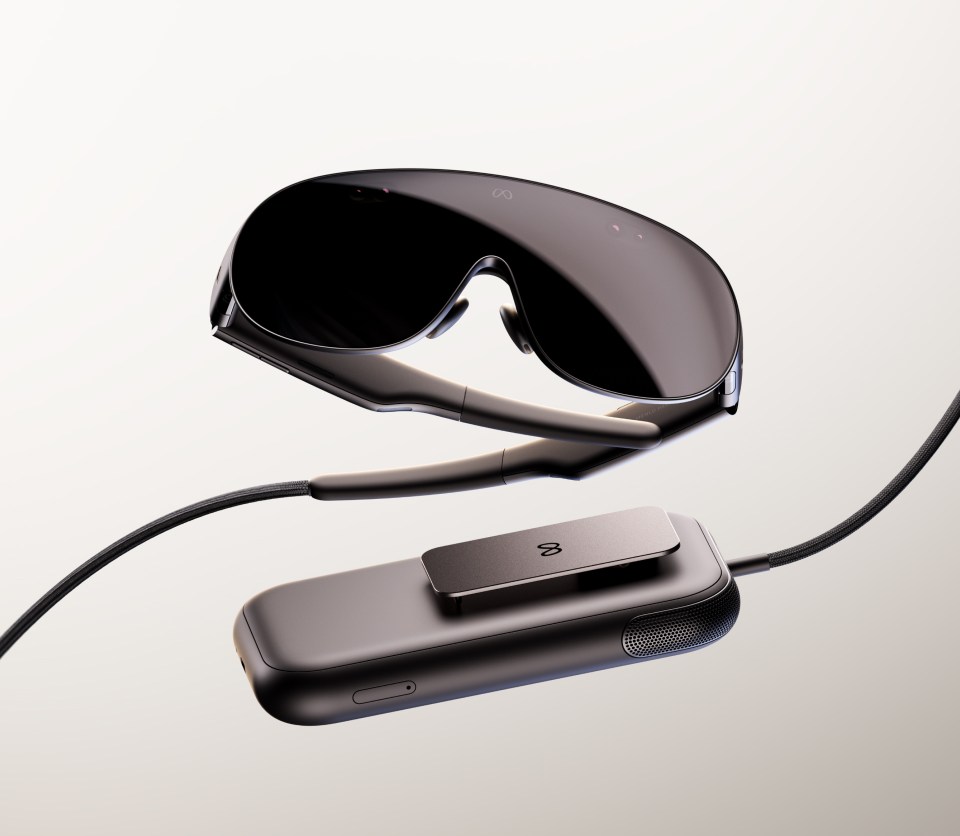
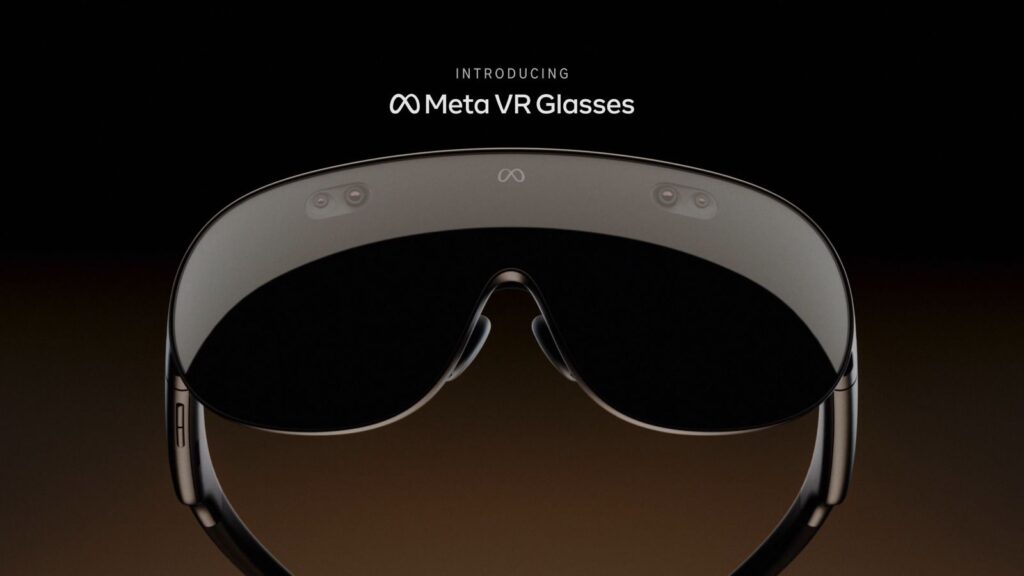
One of the biggest hardware announcements is simply called Meta VR Glasses.
Instead of building another bulky standalone VR headset, Meta has dramatically reduced the size of the device, with the glasses themselves weighing only around 100g — roughly one-fifth the weight of the Meta Quest 3.
Meta achieved this using a split design.
Most of the processing, storage and battery components have been moved into an external puck connected to the glasses via an optical cable. This allows the glasses themselves to remain significantly lighter.
The headset features a 5K Infinite Display using micro-OLED panels, delivering 37 PPD alongside Dolby Vision support. Dolby Atmos spatial audio is also integrated directly into the frame.
Meta says it is also the world’s first VR device to receive IMAX Enhanced certification.
Users will be able to watch 3D movies and immersive content from platforms including Disney+, Prime Video, YouTube, Crunchyroll and ESPN.
But entertainment is only part of the idea.
Meta VR Glasses can create multiple virtual displays for productivity, while almost any flat surface can be transformed into a virtual keyboard and touchpad.
Interaction is handled through eye tracking, hand gestures and Meta’s Muse AI, reducing the need for traditional VR controllers.
Powering the system is Qualcomm’s new Snapdragon Reality Elite platform.
The external puck provides up to around three hours of high-resolution media playback and supports 45W fast charging.
Meta VR Glasses are scheduled to launch in spring 2027 for USD1,299.99, equivalent to roughly RM5,400 before taxes and local pricing adjustments.
Ray-Ban Meta Audio removes the camera

Meta is also expanding its smart glasses lineup with the new Ray-Ban Meta Audio.
Unlike the regular Ray-Ban Meta glasses, the Audio model does not include a camera. Instead, it focuses on open-ear audio, calls and voice-based AI interactions.
At just 43g, it is among Meta’s lightest and thinnest AI glasses to date.
Battery life is rated at up to 12 hours, while the charging case provides up to another 48 hours of use.
Users can listen to music and podcasts, answer calls and interact with Meta AI directly through the glasses.
Ray-Ban Meta Audio comes in Clubmaster and Burbank designs with a total of 23 frame and lens combinations, including prescription lens options.
Pricing starts from USD349, with shipments beginning on 13 October.
Ray-Ban Meta Gen 3 now records 3K video
The conventional camera-equipped Ray-Ban Meta glasses are also receiving a third generation.
Ray-Ban Meta Gen 3 features a slimmer frame and introduces a programmable Action Button for quicker access to selected functions, including Meta AI.
Battery life has increased to up to nine hours, while a new six-microphone array is designed to improve calls and voice recognition in noisy environments.
The glasses feature a 12MP camera capable of recording up to 3K Ultra HD video.
Meta also plans to enable video recording with Dolby Atmos 360-degree spatial audio.
Ray-Ban Meta Gen 3 starts from USD449.
Muse turns Meta’s AI into an agent
Hardware wasn’t the only major focus of Meta Connect 2026.
Meta is positioning Muse as its next-generation personal AI agent.
Instead of simply answering questions like a conventional chatbot, Muse is designed to perform multi-step tasks on behalf of the user.
This can include sending emails, managing calendars, completing web forms, shopping online and planning trips.
Meta plans to integrate Muse directly into its AI glasses over the coming months.
In practice, a user could look at a product, an event poster or even a handwritten shopping list and ask Muse to take action based on what the glasses can see.
Muse will also have its own email address, while the Mac version can interact with applications on a user’s computer after permission is granted.
Meta is working on integrations with services including Walmart, Best Buy, Sephora, PayPal, Expedia, Instacart, Notion, GitHub and Box.
Muse Charm puts the AI agent in your pocket

Meta also previewed one of the more unusual products at the event — Muse Charm.
It is a small portable AI device designed to provide access to Muse without requiring users to take out their smartphone.
The device features a small display capable of showing a Muse AI avatar and uses Meta’s real-time voice technology for conversations.
Unlike the company’s new smart glasses, however, Muse Charm remains closer to an experimental product.
Meta has produced only a limited number of prototypes so far, and specifications, pricing and launch markets have not been announced.
More information is expected later this year.
Meta Ray-Ban Display gets an AI avatar for video calls
The existing Meta Ray-Ban Display is also getting several new features.
One of the most unusual is called Hologram.
Users can scan their face through the Meta AI app to generate a realistic digital avatar. During a WhatsApp video call, the glasses can then use the avatar to represent the wearer even though there isn’t a camera directly pointing at their face.
The system uses the user’s speech, voice and other contextual information to estimate facial expressions and animate the avatar in real time.
The update also introduces new cycling and public transport navigation features, while smartphone notifications can be mirrored directly onto the glasses’ display.
Meta’s next computing platform may not be a smartphone
Meta Connect 2026 makes the company’s direction increasingly clear.
Rather than relying solely on conventional VR headsets, Meta is trying to put AI into devices people may actually wear throughout the day.
The 100g Meta VR Glasses push VR closer to the form factor of conventional eyewear, while Ray-Ban Meta continues moving AI into everyday glasses. Muse Charm takes the same idea even further by separating the AI assistant from both smartphones and glasses.
For Malaysian consumers, however, the most immediate development is much simpler: Meta’s AI glasses are finally coming officially to Malaysia later this year.
Local pricing and availability have yet to be announced.