
OPPO officially pulled the wraps off OPPO Reno16 series on May 25, introducing two models — the standard Reno16 and the Reno16 Pro.
The headline design feature this year is the Reno16 Pro’s “Pounding Stardust” colorway, which debuts what OPPO calls its 3D Ice-Transparent Floating Craft — a first-of-its-kind application of embedded micro-nano printing technology on a consumer smartphone rear panel.
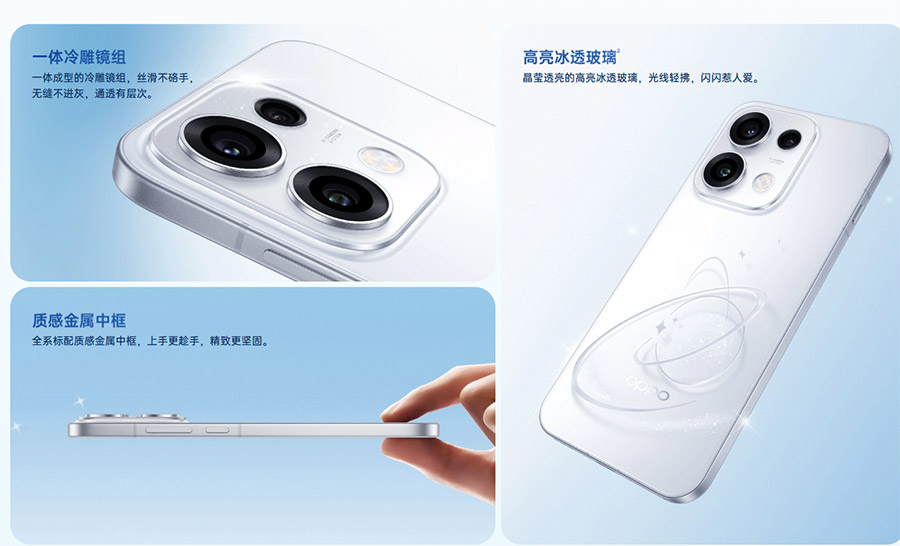
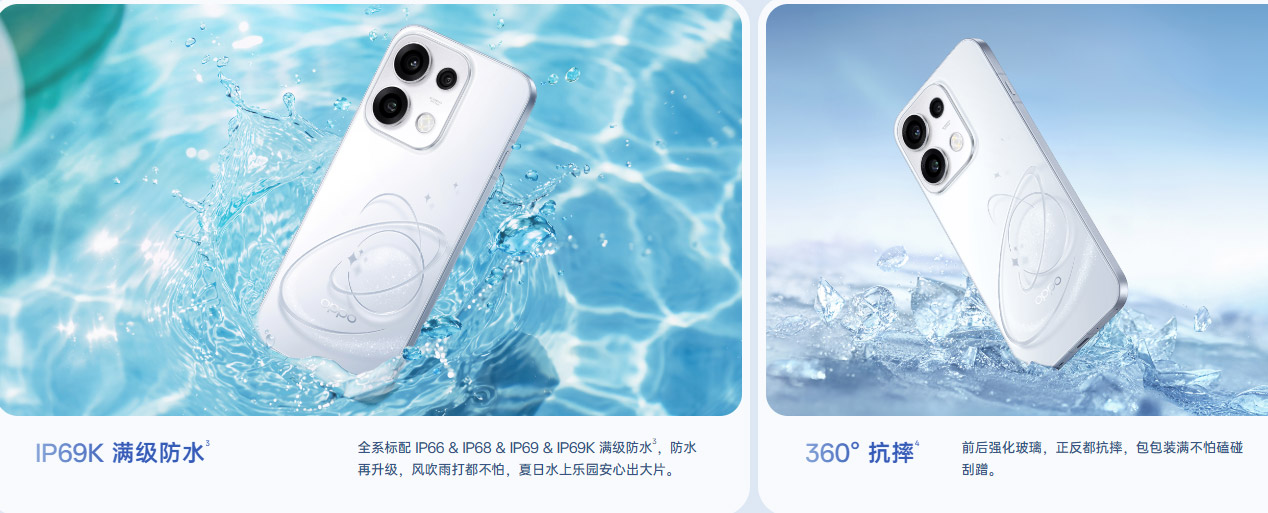
The result is a rear glass that renders a visually convincing naked-eye 3D floating planet effect from any viewing angle, surrounded by a galaxy of fine-glitter texturing. OPPO says its team screened hundreds of gradient prototypes before landing on the final look. Both models also feature a one-piece cold-carved glass camera module and metal frame as standard, with full IP66, IP68, IP69, and IP69K water resistance ratings across the lineup.
On the specs front, the standard Reno16 gets a 6.32-inch 1.5K OLED display, the new MediaTek Dimensity 8550 SUPER chipset — a world-first debut — paired with a 6,700mAh battery and 80W wired fast charging.
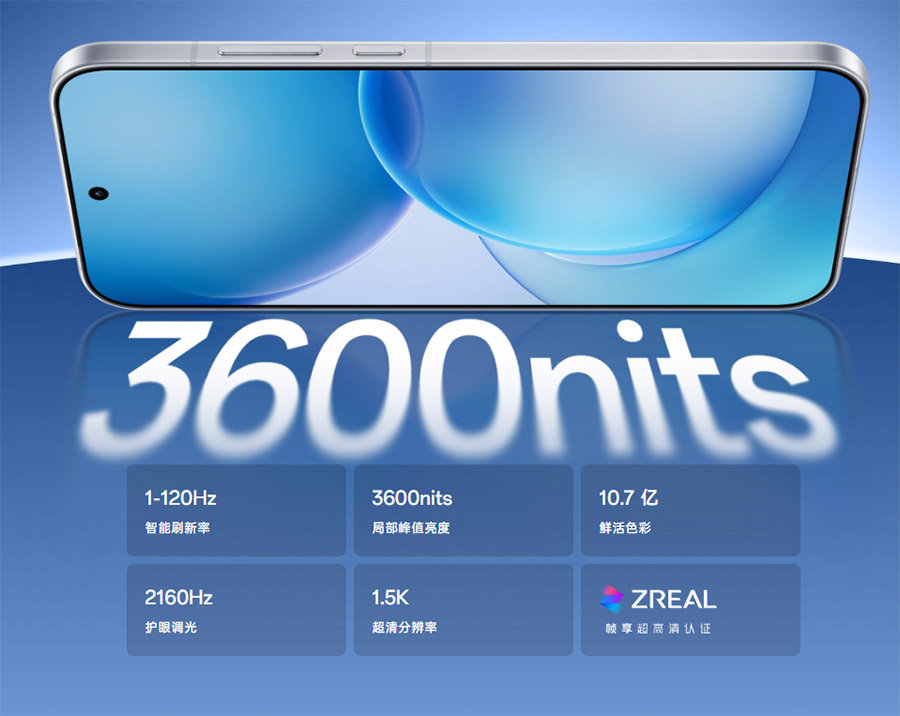
The Reno16 Pro steps up to a larger 6.78-inch 1.5K OLED panel, the flagship-tier Dimensity 9500s, a bigger 7,000mAh battery, and adds 50W wireless charging on top of the same 80W wired speeds.
Both models are equipped with OPPO’s in-house Shanhai communications enhancement chip alongside a dedicated Wi-Fi acceleration chip, with Wi-Fi 7 support on the Pro.
The camera system on both phones centres around a 200MP main shooter, accompanied by a 50MP periscope telephoto and a 50MP ultrawide, with a 50MP front camera rounding things out.


The Pro model adds a gimbal stabilisation structure to the main camera, supporting up to ±4° optical stabilisation and up to 5° intelligent horizon correction — handy for casual video recording and live streaming.
OPPO also introduced its Natural Tone Engine on the Pro, a chip-level processing feature that captures dual-exposure frames simultaneously during live streaming to preserve both highlight and shadow detail, delivering cleaner, more true-to-life footage compared to conventional HDR methods.
For photography enthusiasts, the new Live Photo Sticker (实况随心贴) feature lets users layer up to 10 live or static photos on a single frame, complete with cutout subjects, freehand drawing, text overlays, and custom stickers — all saved natively as a live photo without re-encoding.
Other live photo modes return as well, including the popular out-of-frame collage, dual-scene simultaneous capture, and 4K live photo burst shooting.

Both phones run ColorOS 16 and are the first Reno devices to feature a dedicated physical AI Key.
A single press activates AI Flash Note, which can capture on-screen content, generate personalised travel itineraries, summarise online course notes, or transcribe voice memos into to-do reminders. The key is also customisable for other shortcuts.
Alongside the phones, OPPO introduced the OPPO Bubble, a magnetic snap-on selfie screen accessory priced at CNY 499 (~RM339). It weighs just 27.5g, measures 7mm thick, supports wireless remote shutter up to 10 metres away, and can double as a phone charm or bag accessory.
As for the prices in China, they are as follow:
OPPO Reno16
-
12GB + 256GB: ¥3499 (~ RM2035)
-
16GB + 256GB: ¥3899 (~ RM2268)
-
12GB + 512GB: ¥3999 (~ RM2326)
-
16GB + 512GB: ¥4299 (~ RM2500)
-
16GB + 1TB: ¥4899 (~ RM2849)
OPPO Reno16 Pro
-
12GB + 256GB: ¥4499 (~ RM2617)
-
12GB + 512GB: ¥4899 (~ RM2849)
-
16GB + 512GB: ¥5299 (~ RM3082)
No news on Malaysian launch yet.
Source: OPPO