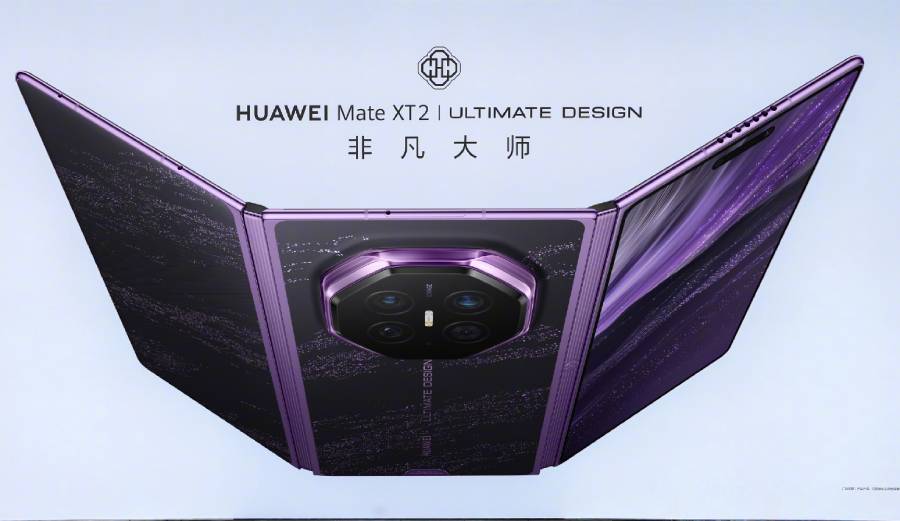
Huawei officially launched its next-generation tri-fold phone, the HUAWEI Mate XT 2 Ultimate Design, at the HarmonyOS 7 | HUAWEI Mate XT 2 launch event on September 7. Ageless icon Andy Lau returns as the phone’s spokesperson, lending the launch some extra star power. Alongside the phone, Huawei also debuted its most powerful in-house chip to date, the Kirin 9050 Pro, making its first appearance on this top-tier device.
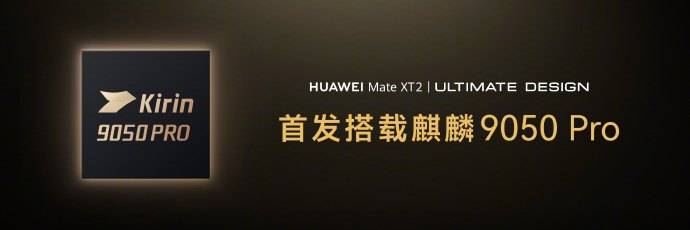
Richard Yu explained that thanks to software-hardware-chip-cloud synergy, the Kirin 9050 Pro pushes the Mate XT 2’s overall performance 42% ahead of its predecessor, the Mate XTs. The chip’s new “Lingxi CPU Hyper-Threading” tech boosts single-core peak performance by 24% and multi-core performance by 52%, and it supports hardware-accelerated 50-million-ray real-time ray tracing. This also marks Huawei’s first high-performance self-developed chip launch in six years, since the Mate 40 — a fairly significant milestone.
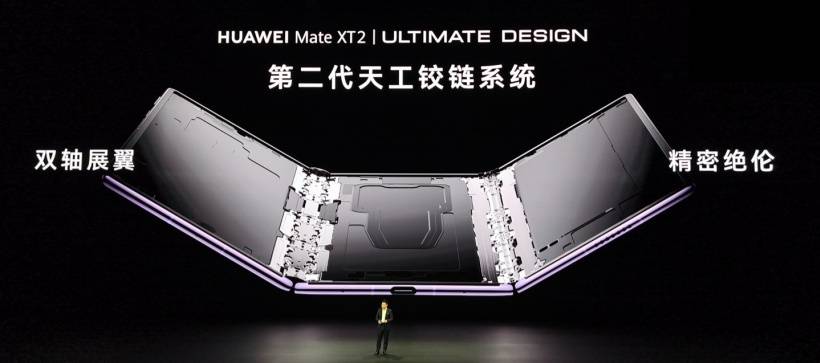
On design, the Mate XT 2 introduces an all-new “wing-unfold” tri-fold structure, opening both sides outward in a way that feels more intuitive to use. The body is just 3.5mm thick, yet for the first time fits two separate displays — an inner and an outer screen — into that ultra-slim frame. Unfolded, it offers a 10.2-inch, 3K-resolution display, claimed to be the largest folding screen in the industry, while somehow still holding onto the title of “world’s thinnest foldable phone” despite the added outer screen.
Durability gets a boost too, with a new “Xuanwu” tri-fold architecture that reworks the hinge and screen engineering. It’s the first tri-fold phone to achieve IP58/59 dust and water resistance. The outer Xuanwu Kunlun Glass sees drop resistance improve 30x and scratch resistance 16x, while the inner screen’s new multi-layer composite structure boosts impact resistance by 200%.
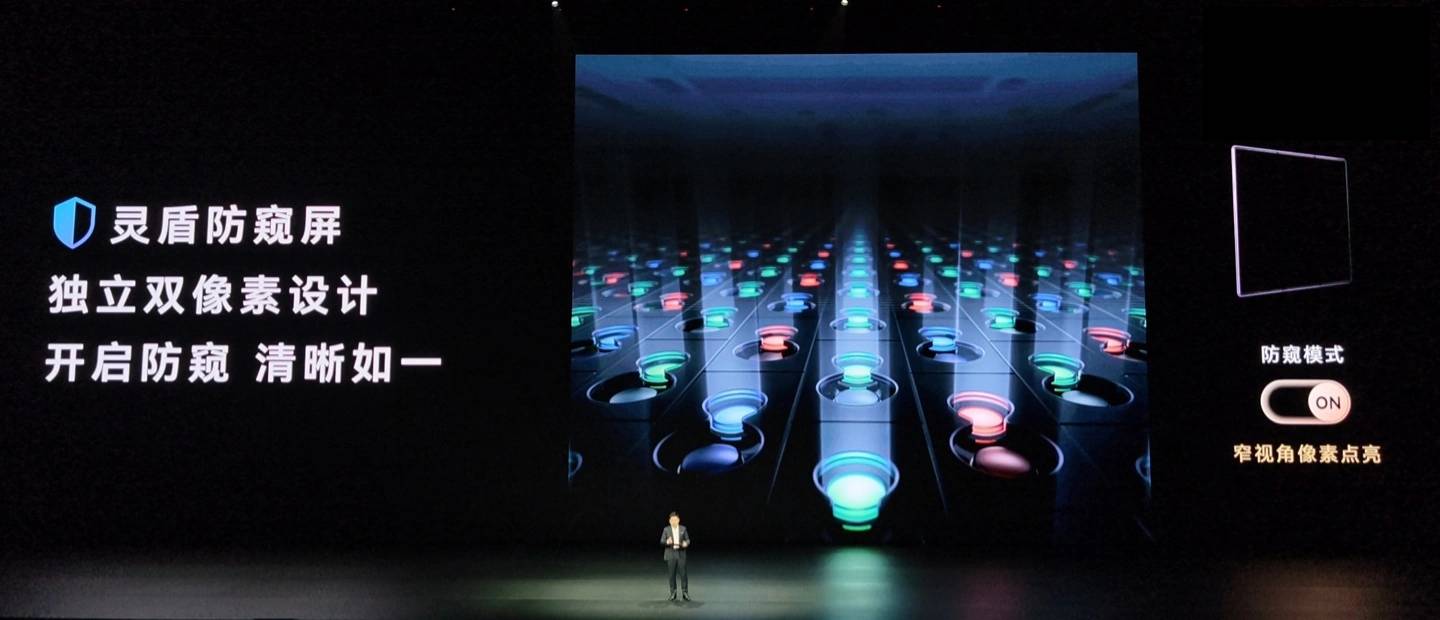
On privacy, the Mate XT 2 debuts what Huawei calls the industry’s first foldable anti-peep screen — the Lingdun Anti-Peep Screen. It uses an independent dual-pixel design that blocks side views without sacrificing display clarity, and can be switched on with a double-tap on the outer screen or the smart control key. Folding the phone to one side adds a layer of “physical” privacy protection too, paired with smart scene-based reminders for combined software-hardware privacy protection — handy for using the phone in public.
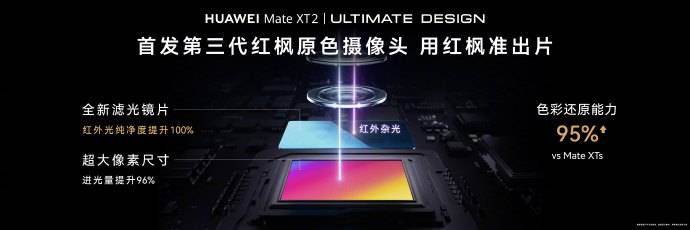
Cameras are a major focus this generation. The main camera uses a 50MP RYYB sensor with a 1/1.28-inch continuously variable aperture (F1.49–F4.0) that adjusts steplessly, letting video automatically adapt to changing light. A new four-cut lens design shrinks the module by 23%, while light intake is claimed to be 100% higher than the iPhone 17 Pro Max. Rounding out the camera setup are a 40MP RYYB high-dynamic ultra-wide, a 50MP RYYB F2.2 periscope telephoto, and a third-generation Red Maple True Color camera — offering 100% purer infrared light capture, 96% more light intake per pixel, and 95% better color accuracy than the previous generation.
Pricing for the Mate XT 2 Ultimate Design spans four configurations: 16GB+256GB at ¥19,999 (approx. RM12,049), 16GB+512GB at ¥21,999 (approx. RM13,254), 16GB+1TB at ¥23,999 (approx. RM14,459), and the top-tier 16GB+1TB with the anti-peep screen at ¥24,999 (approx. RM15,062). No word yet on international availability.
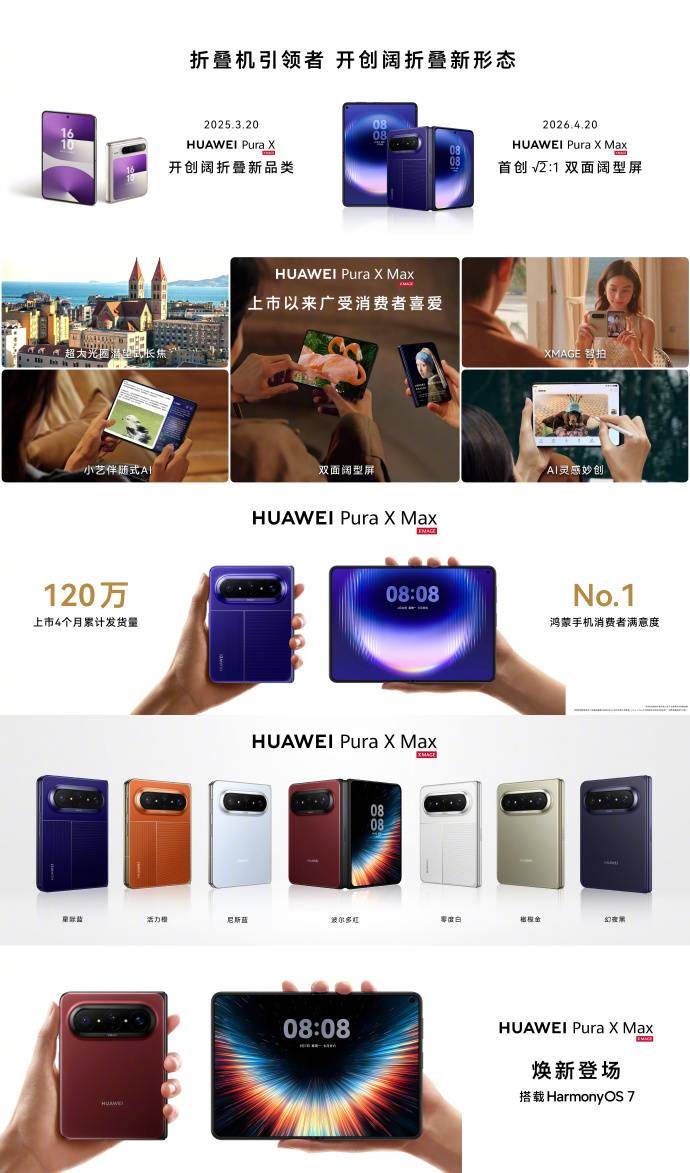
Huawei also used the event to introduce its next foldable flagship, the HUAWEI Pura X Max, built around a “dual-wide” concept — a 5.4-inch outer display and 7.7-inch inner display, both in a √2:1 paper-like aspect ratio, so it functions as a phone folded and a tablet unfolded. New colorways Xuche Blue and Canying Purple join the lineup, alongside a build featuring 3D prism glass and a textured ceramic camera ring. On the camera side, it packs a large-aperture periscope telephoto and an ultra-light-variable main camera, backed by second-generation Red Maple True Color imaging for sharper telephoto, macro, and portrait shots. Under the hood sits the Kirin 9030 Pro chip running HarmonyOS 7, with Xiaoyi’s companion AI baked in for smarter everyday use, plus support for BeiDou satellite messaging and Huawei’s faster 5A connectivity.
The Pura X Max also comes in four configurations: 12GB+256GB at ¥10,999 (approx. RM6,628), 12GB+512GB at ¥11,999 (approx. RM7,229), a Collector’s Edition 16GB+512GB at ¥12,999 (approx. RM7,832), and the top Collector’s Edition 16GB+1TB at ¥13,999 (approx. RM8,434).
Stay tuned to MyMobileTrend for more updates.
Source: Huawei China