Xiaomi’s Redmi brand officially launched the K100 Pro series tonight (August 11, 7pm China time), and this time it’s doing things a bit differently. Instead of the usual standard-plus-Pro Max combo, Redmi is kicking things off with the K100 Pro and K100 Pro Max, while the standard K100 will arrive later. The event was hosted by Wei Siqi, Xiaomi China’s marketing GM, and the company’s slogan for the launch was basically “full specs, full marks flagship.”
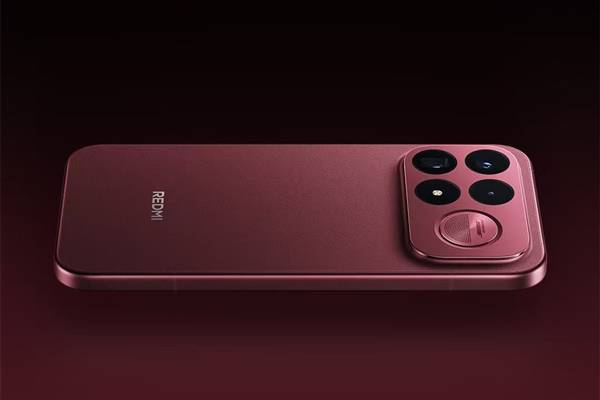
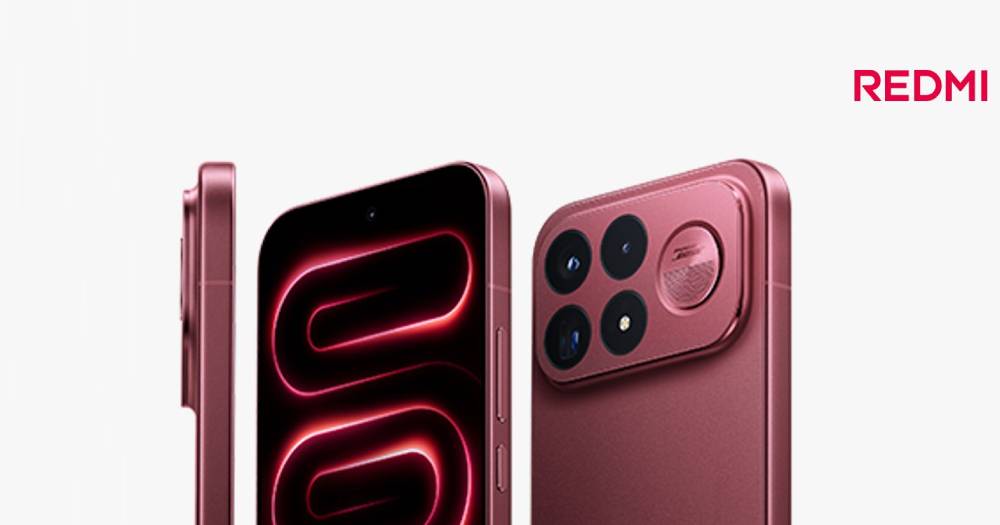
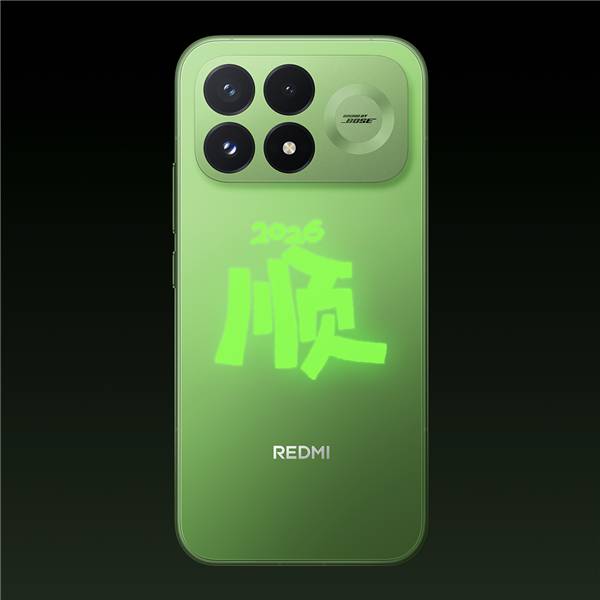
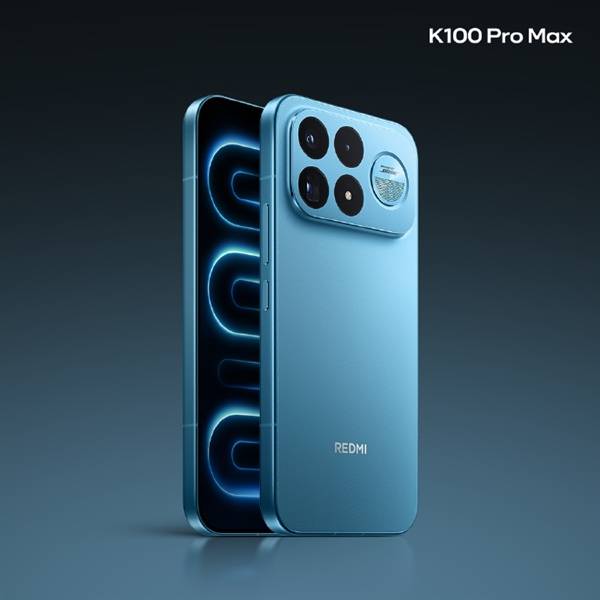
Design-wise, both phones go with a single hole-punch flat screen and a metal flat-edge frame. The signature color is called “Cabernet Red,” which looks a lot like the cherry red rumored for the iPhone 18 Pro. The K100 Pro also gets a unique “Firefly Glow” colorway with a glow-in-the-dark back panel that can “paint” flowing patterns in the dark — a fun little touch.
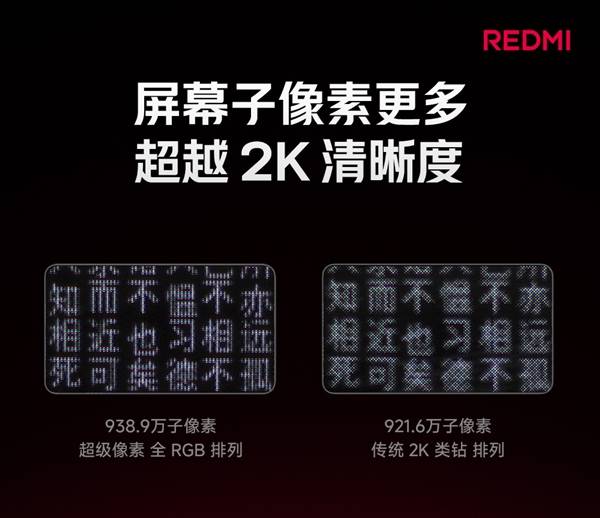
The display is really where Redmi focused its energy this round. Both phones debut a new M11 OLED material paired with “Super Pixel” tech, where each pixel gets its own independent red, green, and blue sub-pixels instead of borrowing from neighbors — meaning sharper images and better color at lower power draw.
Refresh rate hits 185Hz across the board, the highest ever on a K-series phone, and touch sampling rate goes up to 480Hz (with some reports citing instantaneous rates up to 4800Hz), which should help during fast-paced gaming. The K100 Pro comes with a 6.59-inch screen while the Pro Max steps up to 6.9 inches, with peak local brightness reaching 4500 nits. Xiaomi’s Qingshan eye protection 4.0 is also onboard, along with a new anti-motion-sickness mode.
Under the hood, both models run on the Snapdragon 8 Elite Gen 5, paired with a dedicated AI graphics chip called D2 — together forming what Redmi calls its “Fierce Dual-Chip” platform. AnTuTu scores reportedly exceed 4 million, with the Pro Max pushing closer to 4.55 million. Cooling comes via a 3D loop cooling pump system.
The K100 Pro Max, aimed squarely at gamers, also gets a dedicated gaming antenna to cut network latency during landscape play, plus native support for high frame-rate modes across more than 30 popular games.

On cameras, both phones pack a triple rear setup with five focal lengths, headlined by a 200MP main sensor with 10cm macro capability and OIS. The Pro Max exclusively gets a 50MP periscope telephoto lens for stronger zoom performance.
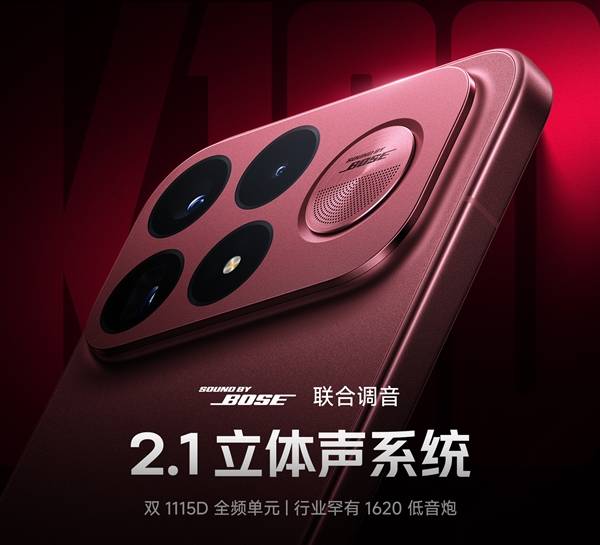
Audio is tuned with Sound by Bose, with extra emphasis on gunfire and footstep detail for gaming — the Pro Max also adds a second speaker for 2.1-channel sound.
Battery life got a serious bump too. The K100 Pro comes with roughly an 8500mAh battery (some sources say 8580mAh), while the Pro Max reportedly hits 9070mAh — nearly a 20% jump over the previous K90 Pro Max’s 7560mAh.
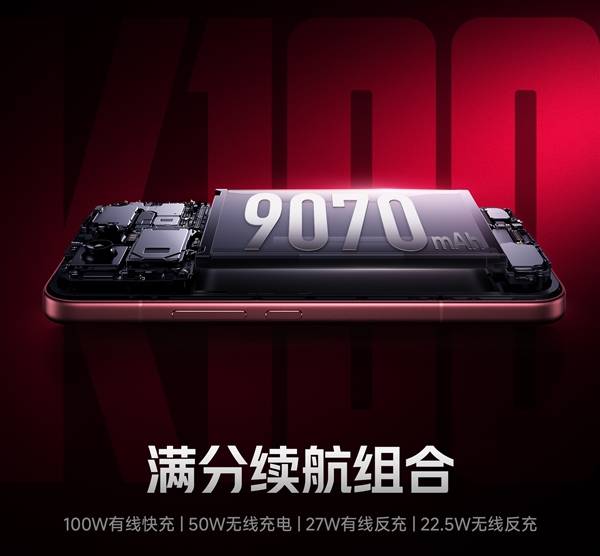
Charging supports 100W wired and 50W wireless, plus reverse charging. Both phones also keep IP68/IP69 water and dust resistance, 3D ultrasonic fingerprint unlock, an IR blaster, full NFC, and an X-axis linear motor.
As for pricing, memory chip costs have pushed prices up across the board this generation. Xiaomi president Lu Weibing has previously said memory costs are expected to stay elevated through 2027 and possibly into 2028.
On pricing, the REDMI K100 Pro comes in four memory configurations, with launch prices of 3,699 yuan (approx. RM2,243) for 12GB+256GB, 4,099 yuan (approx. RM2,486) for 16GB+256GB, 4,299 yuan (approx. RM2,607) for 12GB+512GB, and 4,699 yuan (approx. RM2,849) for the top 16GB+512GB variant.
The K100 Pro Max costs noticeably more, starting at 4,199 yuan (approx. RM2,546) for 12GB+256GB, 4,599 yuan (approx. RM2,789) for 16GB+256GB, 4,799 yuan (approx. RM2,910) for 12GB+512GB, 5,199 yuan (approx. RM3,153) for 16GB+512GB, and topping out at 5,999 yuan (approx. RM3,638) for the flagship 16GB+1TB configuration.
The standard K100 hasn’t been detailed yet — Redmi says it’ll launch separately later, targeting a more budget-friendly price point.
For more info, visit mi.com China