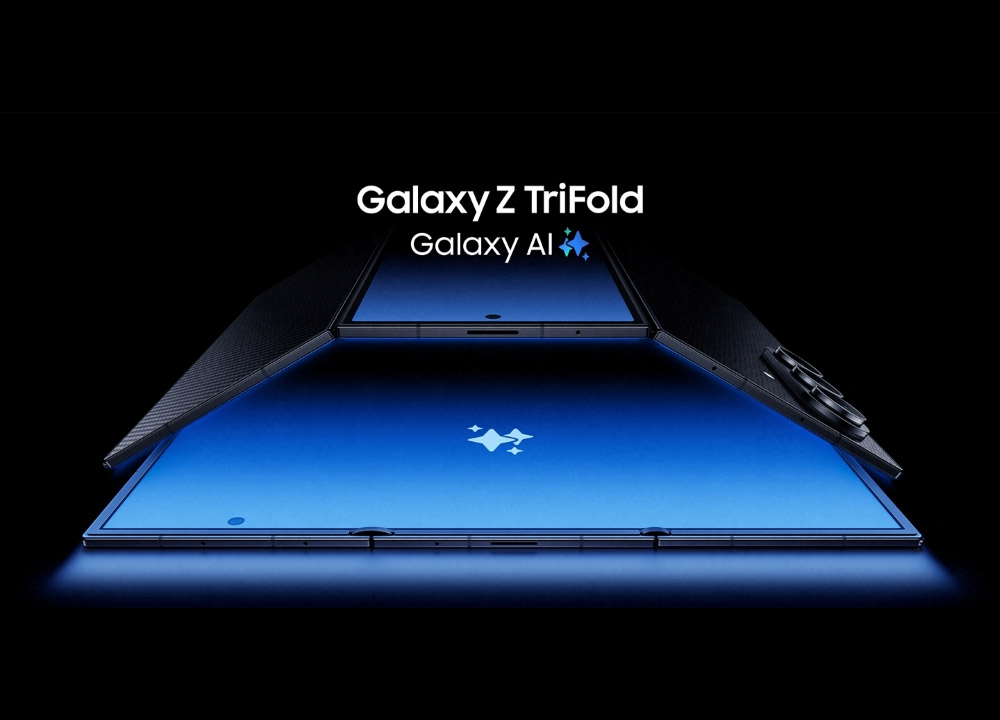
After more than a year of anticipation and leaks, Samsung, the dominant leader in the Android smartphone market, has officially taken the wraps off its first tri-folding smartphone, the Samsung Galaxy Z TriFold. Positioned as a device that merges the portability of a smartphone with the expansive display area of a tablet, the Z TriFold establishes a distinct presence in the premium foldable segment.
The core innovation of the Galaxy Z TriFold lies in its complex multi-hinge architecture. Unlike some multi-fold devices on the market, the Z TriFold employs an inward-folding mechanism, utilizing two different-sized Armor FlexHinge systems. These are assembled via an automated process to ensure smooth, synchronized folding and unfolding actions. Samsung confirms the main display has undergone durability testing for over 200,000 folds.
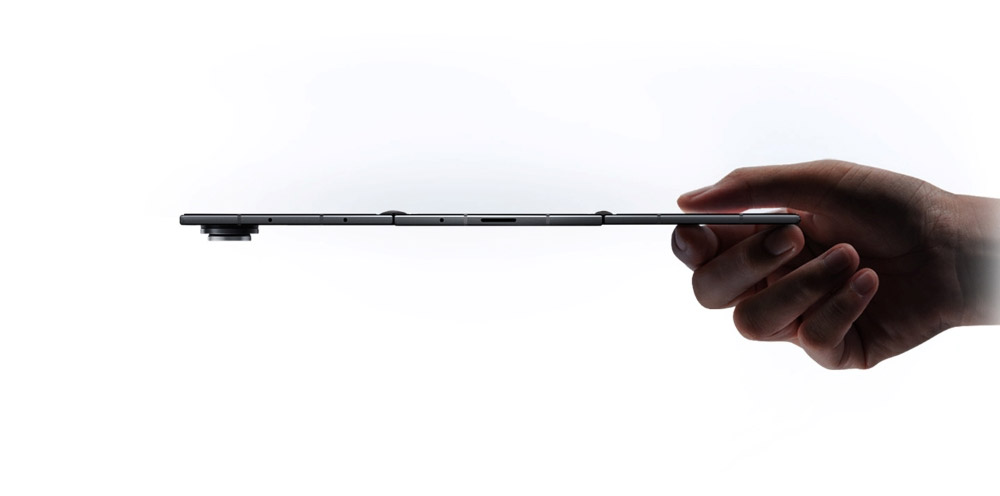
The device boasts impressive thinness and robust construction. When fully unfolded, the thickness measures approximately 3.9 mm at its thinnest point (at the screen/SIM tray area), increasing slightly across the panel. In its folded state, the phone measures 12.9 mm thick, with the total weight coming in at 309 grams. The construction features a durable blend of materials, including a titanium hinge housing, an Advanced Armor Aluminum frame, and a Corning® Gorilla® Glass Ceramic 2 cover. It carries an IP48 rating for water resistance and will be available in the Crafted Black colorway.
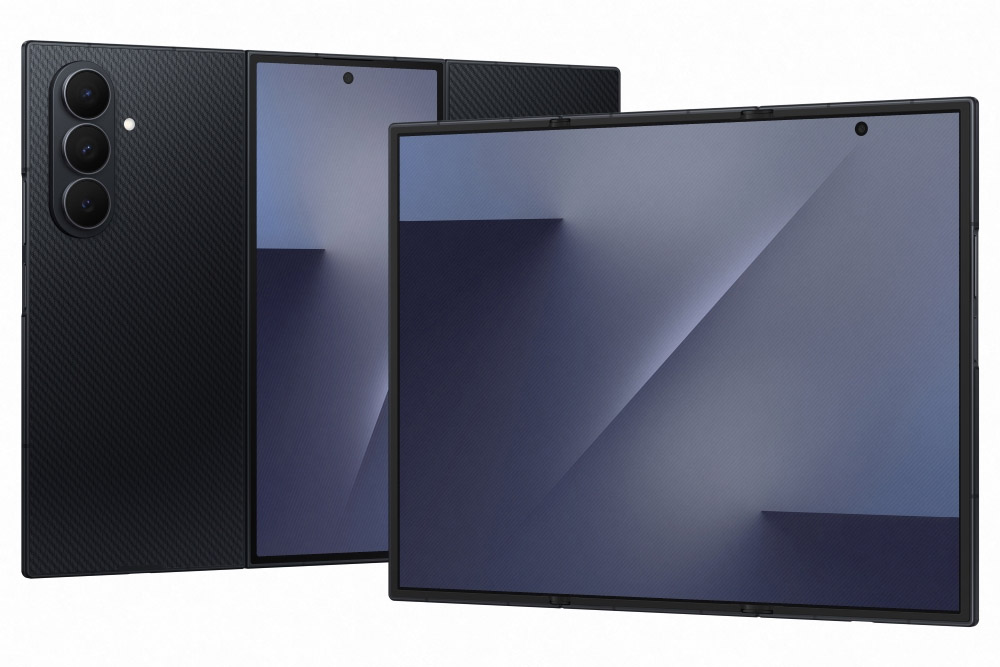
The Z TriFold is defined by its expansive display real estate. It features both internal and external Dynamic AMOLED 2X panels, both supporting a 1–120 Hz adaptive refresh rate.
-
Main Screen (Unfolded): A massive 10.0-inch display with QXGA+ resolution (2160 x 1584). It offers a peak brightness of 1600 nits, making it suitable for productivity and media consumption.
-
Cover Screen: A 6.5-inch display with FHD+ resolution (2520 x 1080) in a 21:9 aspect ratio, featuring a high pixel density of 422 ppi and an even brighter peak output of 2600 nits.
Powering the device is the custom Snapdragon 8 Elite Mobile Platform for Galaxy processor. It comes standard with 16 GB of RAM, with storage options available at 1 TB or 512 GB, though MicroSD expansion is not supported. The software experience is handled by One UI 8 based on Android 16.
The camera system is flagship-tier across the board:
-
Rear Array: A potent 200 MP wide-angle main camera ($f/1.7$ aperture, OIS, 2x optical quality zoom), a 12 MP ultra-wide lens (120˚ FOV), and a 10 MP telephoto lens (3x optical zoom, 30x Space Zoom).
-
Front Cameras: Both the cover screen and the main screen are equipped with a 10 MP selfie camera.
The Z TriFold is kept running by a 5,600 mAh three-cell battery system. It supports 45 W Super-Fast Charging 2.0, capable of reaching approximately 50% charge in 30 minutes. It also includes support for 15 W Wireless Charging 2.0 and Wireless PowerShare. Connectivity is comprehensive, including 5G, LTE, Wi-Fi 7, and Bluetooth v5.4.
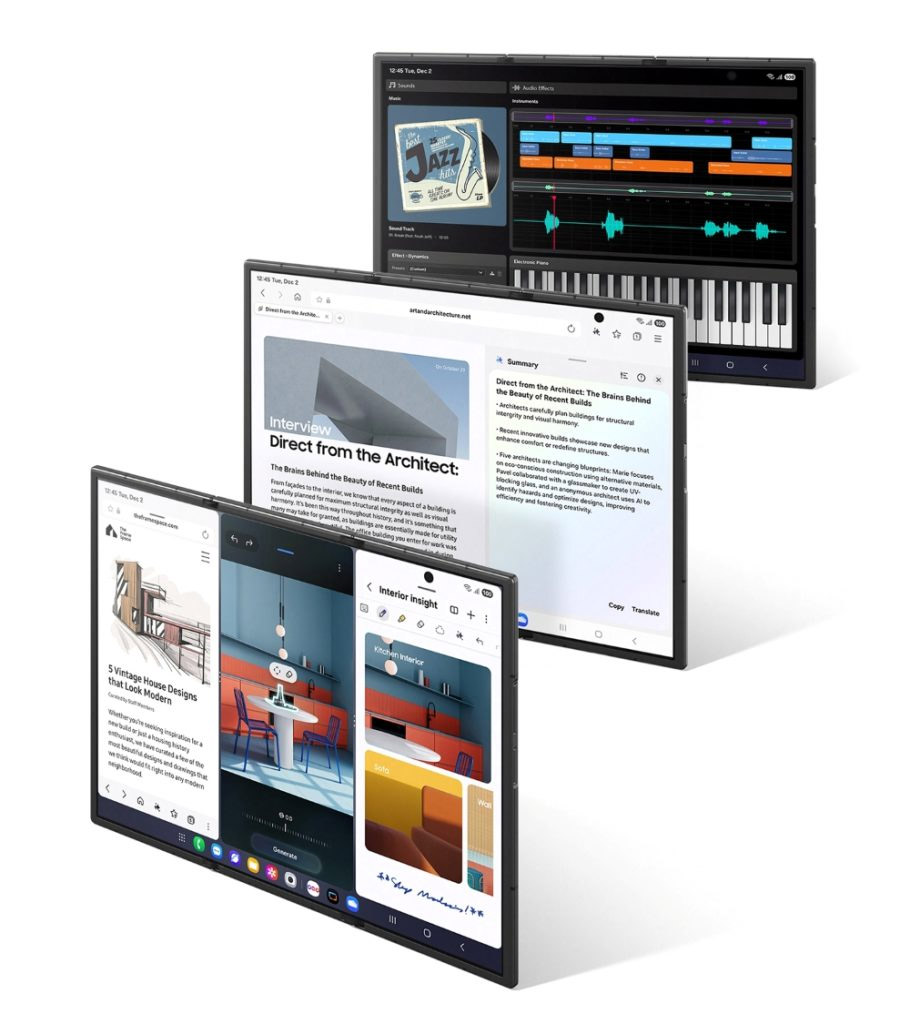
Samsung has tailored the software to take full advantage of the screen size, enabling features like independent Samsung DeX support and enhancements to multitasking tools such as the Taskbar for improved large-screen workflow. Security is managed by the Samsung Knox platform and the dedicated Samsung Knox Vault hardware solution. The device supports up to two Nano SIMs and multiple eSIMs.
The Galaxy Z TriFold is scheduled for an initial launch in South Korea on December 12. Following the domestic debut, it is expected to roll out to major international markets, including Mainland China, Singapore, Taiwan, and the UAE, before the end of the year. Consumers in the United States will have to wait until the first quarter of 2026.
The starting price for the device is approximately 3.59 million Korean Won, which translates to roughly RM10,092 .
Source: Samsung