
Google updates App Quality Guidelines to curb Android battery drain — violators to get warning labels
According to Android Authority, Google has released a major update to its App Quality Guidelines, introducing stricter rules to reduce excessive battery drain caused by Android apps. The new policy specifically targets the misuse of the Wake Lock mechanism — a core system feature that allows apps to keep the CPU running even when the screen is off.
🔋 Targeting the root cause: Wake Lock abuse
Wake Locks are crucial for tasks like music playback, background downloads, and data syncing. However, some apps have been found to hold these locks unnecessarily for long periods, preventing devices from entering deep sleep and rapidly draining the battery.
Google’s updated guidelines aim to ensure that apps use Wake Locks responsibly, balancing functionality with power efficiency.
⏰ New energy standards: 2-hour cap within 24 hours
Starting March 1, 2026, Google will officially enforce the following thresholds:
-
For smartphones: Any app that keeps the device awake for more than 2 hours within a 24-hour period without valid justification will be flagged as “excessive battery consumption.”
-
For wearables: Apps consuming more than 4.44% of the device’s total battery per hour during active sessions will also be considered non-compliant.
⚠️ Penalties: Warning labels and reduced visibility on Google Play
To discourage poor energy optimization, Google will impose two key penalties on offending apps:
-
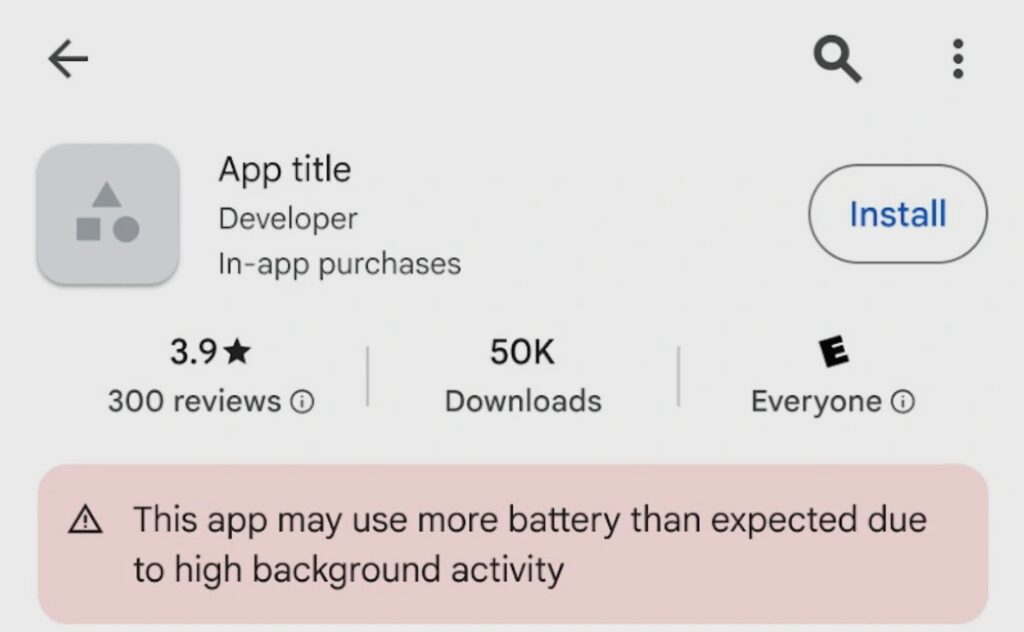
Play Store Warning Labels
Apps exceeding the limits will display a visible notice on their Play Store page:
“⚠️ This app may cause higher battery usage.” -
Lower Store Visibility
Violating apps will appear less frequently in Play Store recommendations, charts, and search results — reducing their discoverability and downloads.
🌱 Industry impact: A more power-efficient Android ecosystem
This policy marks a significant step in Google’s ongoing effort to improve Android’s overall energy efficiency. Developers will be encouraged to refine their background processing, optimize system resources, and minimize unnecessary wakeups.
With the new guidelines coming into effect in 2026, Android users can expect longer battery life and a more sustainable mobile experience.